

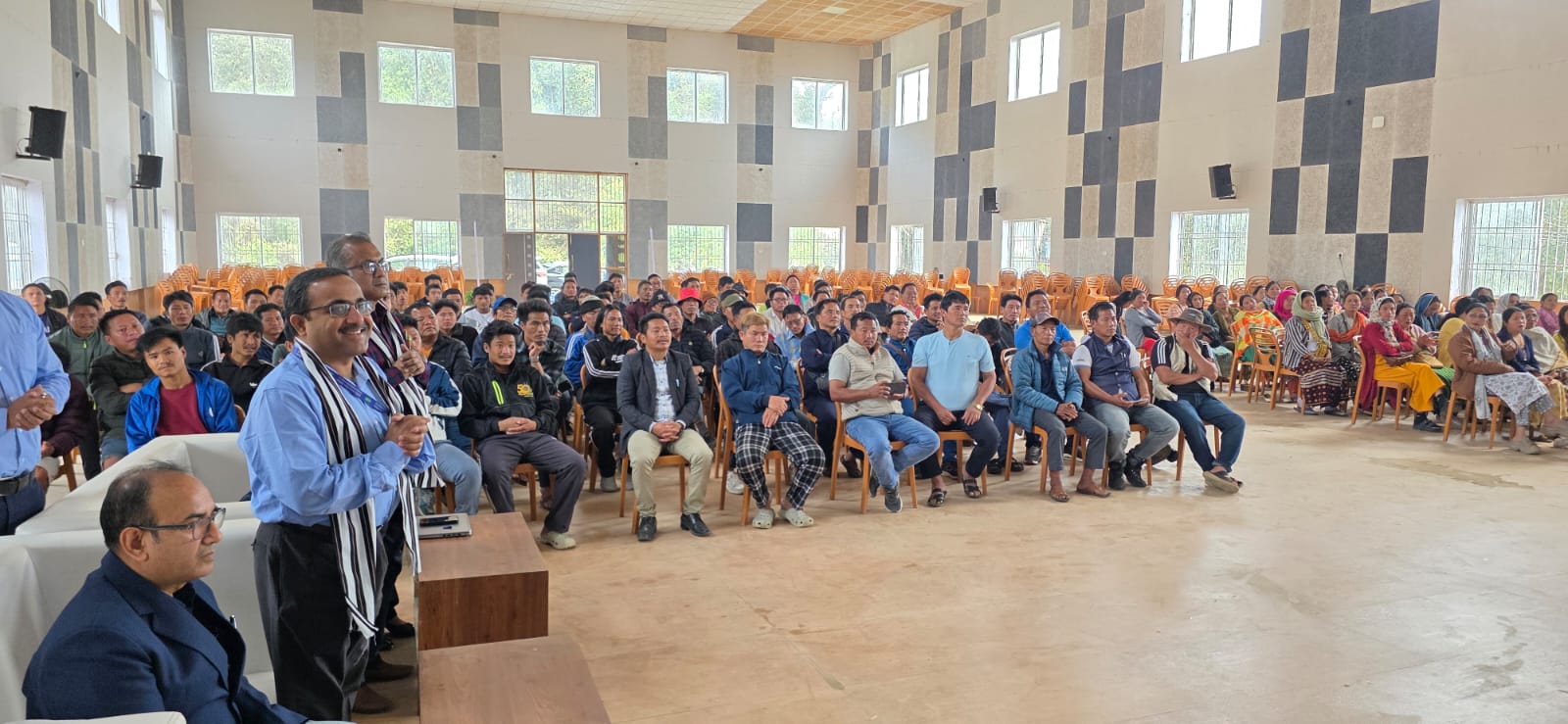
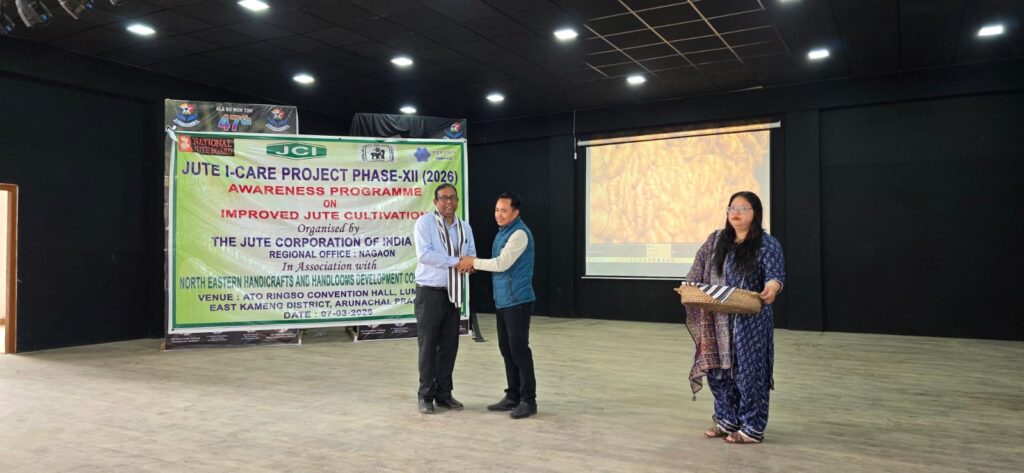
Seppa, March 8 (WE THE NAGAS): In a significant move aimed at diversifying the agricultural landscape of Arunachal Pradesh, an extensive awareness programme on improved jute cultivation was held on Friday at the Ato Ringso Convention Hall in Seppa. The programme witnessed the participation of more than 200 farmers from Papu Valley, East Kameng and Pakke Kessang districts, indicating growing interest in adopting high-value cash crops in the region.
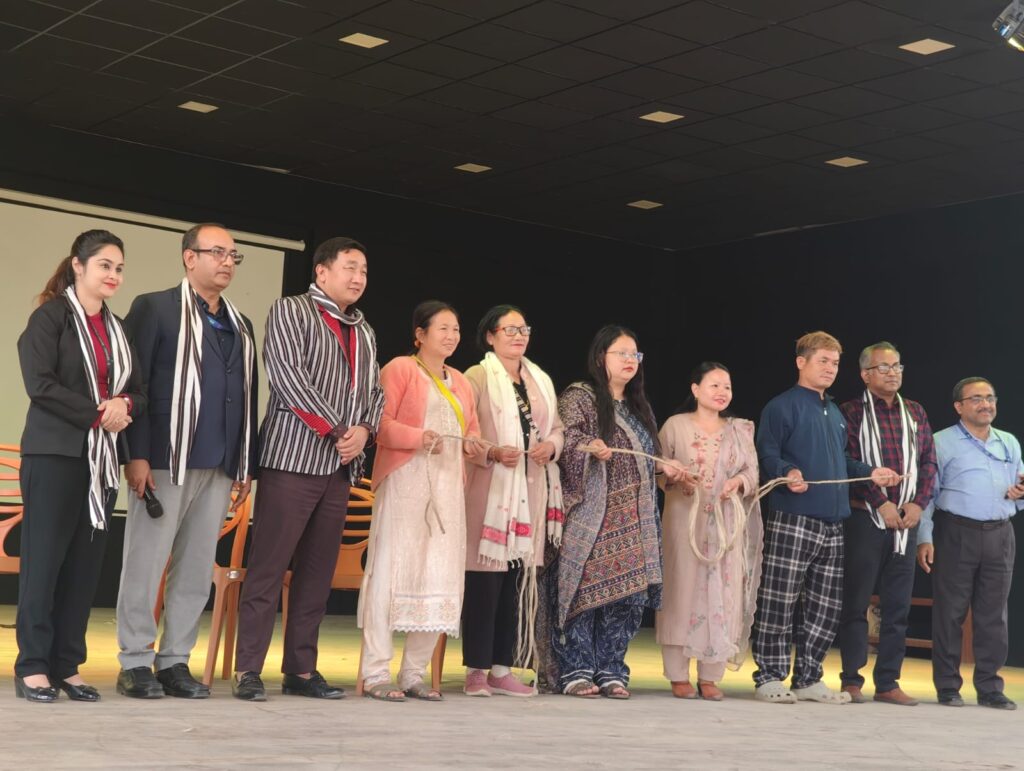
The programme was jointly organized by the Jute Corporation of India Ltd. (JCI) and the North Eastern Handicrafts and Handlooms Development Corporation Ltd. (NEHHDC), with support from the National Jute Board under the Ministry of Textiles, Government of India.
The awareness session marked a historic milestone as jute cultivation has traditionally not been practiced in Arunachal Pradesh. Experts and officials at the programme presented a comprehensive roadmap to help farmers tap into the opportunities offered by the “Golden Fibre” industry.
Officials from JCI delivered a detailed presentation explaining the entire value chain of jute cultivation. The session covered soil preparation, modern cultivation techniques, processing methods and marketing strategies to ensure farmers understand every stage of production.
Technical experts also highlighted that the agro-climatic conditions of the Papu Valley region are highly suitable for jute cultivation. This finding has generated optimism among local farmers about the crop’s potential as a sustainable and profitable agricultural option.
In a major confidence boost for farmers, JCI assured that it would procure the entire harvest at the Minimum Support Price (MSP) fixed by the Government of India. The assurance is expected to reduce market risks for farmers who may be cultivating jute for the first time.
Managing Director of NEHHDC, Mara Kocho, emphasized the importance of regional cooperation in promoting jute cultivation. He announced that NEHHDC would soon enter into a formal agreement with JCI to streamline the implementation of jute-related schemes across the North Eastern states.
Alongside jute cultivation, the programme also encouraged farmers to adopt integrated farming practices. NEHHDC officials promoted Eri silk cocoon rearing as an additional source of income.
According to the officials, integrating jute cultivation with Eri silk production could help farmers develop a resilient dual-income system. NEHHDC further assured that it would procure the entire cocoon stock for its specialized Eri silk spinning facility located in Baksa, Assam.
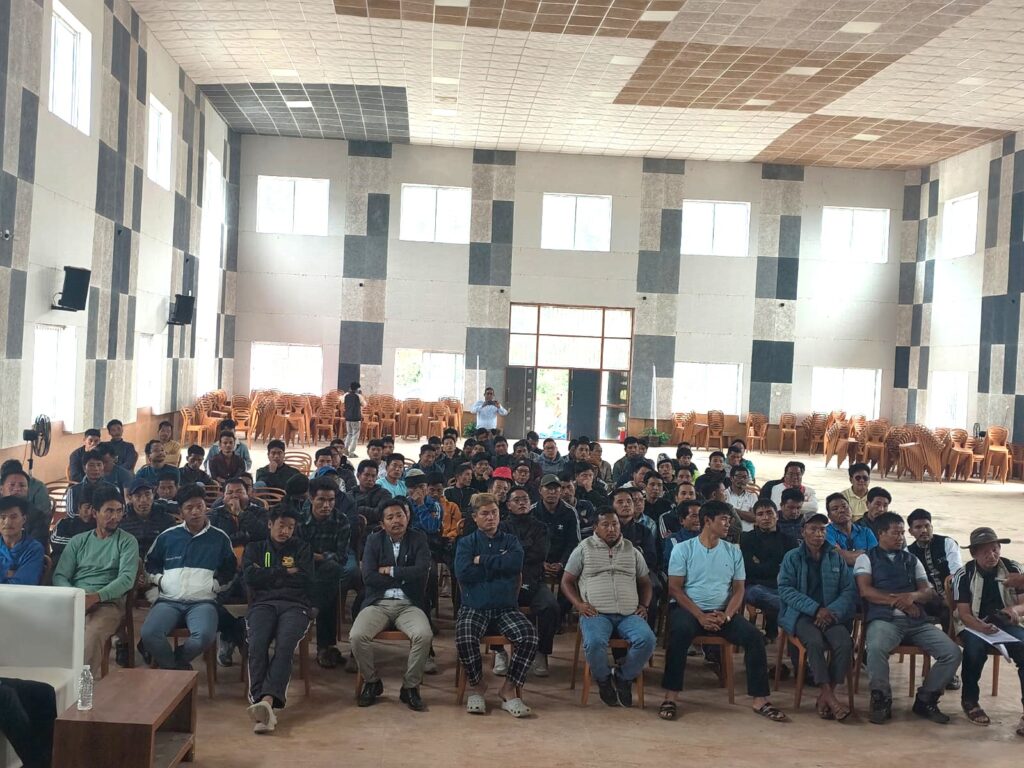
The programme saw active participation from local farmers, youth representatives, Gram Panchayat members and village elders. Kalyan Majumdar, General Manager of JCI, attended the programme along with his technical team to guide the farmers.
The event was mobilized by Er. Hanu Techi Tara, Executive Engineer of the Water Resources Department (WRD) in Seppa, in his personal capacity, reflecting strong community-driven efforts to promote agricultural innovation.
The awareness programme is set to open new opportunities for farmers in East Kameng and nearby districts by transforming underutilized land into productive hubs that can contribute to India’s growing textile industry.